Snapshot:
- Paver restoration combines deep cleaning, joint re-sanding, repair of sunken or cracked units, and sealing to reverse sun and moisture damage.
- Bonita Springs, FL conditions (salt air, humidity, heavy seasonal rain) accelerate fading and joint erosion compared to drier climates.
- Professional restoration differs from basic cleaning by addressing structural issues like shifting and settling, not just surface appearance.
Faded concrete or paver surfaces generally need a multi-step restoration process that includes cleaning, repairing damaged units, re-sanding joints, and sealing to restore both appearance and function. This approach differs from a simple rinse or spot cleaning because it addresses the underlying causes of deterioration rather than masking them temporarily.
Paver restoration becomes necessary when sun exposure, moisture, and ground movement combine to wear down a paved surface over several years. In Bonita Springs, FL, coastal humidity and salt air add another layer of stress that inland installations rarely face. Homeowners who notice color loss, loose sand in the joints, or pavers that rock underfoot are usually seeing early signs that restoration is due.
Why Pavers Fade and Deteriorate Over Time
Paver surfaces lose their original color and strength through a combination of environmental and structural factors. Understanding these causes helps explain why restoration is a multi-stage process, not a single treatment.
- UV exposure: Constant sun breaks down pigments and the surface sealant layer, leading to a chalky or dull appearance.
- Moisture intrusion: Rain and humidity seep into unsealed or worn paver surfaces, promoting mold, mildew, and efflorescence.
- Joint sand erosion: Sand between pavers washes out over time, allowing shifting, weed growth, and insect activity.
- Ground settlement: Sandy or loose soil conditions, common across Southwest Florida, can cause individual pavers to sink or become uneven.
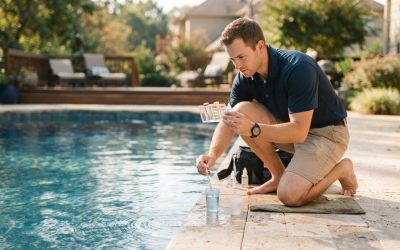
A simple water test can indicate whether a sealer is still protecting the surface. If water beads and rolls off, protection remains intact; if it soaks in and leaves a dark spot, the paver surface has likely lost its protective barrier.
The Paver Restoration Process Step by Step
Professional restoration generally follows a sequence designed to prepare the surface fully before any sealant is applied. Skipping steps or rushing dry times often produces uneven or short-lived results.
- Deep cleaning: Pressure washing removes dirt, algae, mildew, and old sealant residue so later steps bond properly.
- Repair and re-leveling: Sunken, cracked, or shifted pavers are lifted, releveled, or replaced to restore a flat, safe surface.
- Joint re-sanding: Polymeric sand is swept into joints and compacted to lock pavers in place and resist weed growth.
- Sealing: A breathable sealer is applied once the surface is completely dry, enhancing color and adding UV and stain resistance.
Pavers must be fully dry, not just surface dry, before sealing begins, since trapped moisture under a sealer coat can cause clouding or bubbling.
Restoration Methods Compared
Different paver types and project conditions call for different restoration approaches. The table below outlines general differences in scope and expected outcome.
| Method | Addresses | Typical Use Case |
| Cleaning only | Surface dirt, algae, light staining | Routine upkeep between full restorations |
| Re-sanding and sealing | Joint stability, color fade, surface protection | Pavers with intact structure but worn sealant |
| Full restoration | Cracks, sinking, fading, and joint loss together | Pavers showing multiple signs of wear |
| Full replacement | Severe structural failure beyond repair | Pavers damaged beyond resealing or releveling |
For permeable paver systems specifically, maintenance differs because sealing is generally avoided to preserve drainage function; the EPA’s permeable pavement guidance notes that removing fine sediment, rather than sealing, keeps these systems functioning properly.
Based in the USA, South West Pavers, LLC provides paver-related services to properties across Bonita Springs, FL, including installation, repair, and sealing. The company’s listed offerings for the area cover standard paver surfaces rather than specialized permeable systems.
Frequently Asked Questions
How often do pavers in Bonita Springs, FL need restoration? Most residential paver surfaces benefit from resealing every 1 to 5 years, depending on sealer type, with full restoration (cleaning, repair, and re-sanding) typically needed less frequently unless damage appears sooner.
Can faded pavers be restored without replacing them? In most cases, yes. Deep cleaning, joint re-sanding, and sealing restore color and function without removing the original pavers, unless individual units are cracked or structurally failed.
What is the difference between paver repair and paver restoration? Repair typically addresses specific problems like sinking or cracked units, while restoration is the broader process that combines cleaning, repair, re-sanding, and sealing into one project.
Does rain affect the restoration timeline? Yes. Sealant needs to cure without rain or heavy moisture exposure, so restoration work is typically scheduled around dry-weather windows, which matters given Bonita Springs, FL’s seasonal rain patterns.
Final Considerations
Restoring faded or damaged pavers works best as a planned process rather than a reaction to visible problems, since early joint and surface issues tend to compound if left unaddressed. Property owners evaluating the condition of existing paver surfaces can use simple checks, such as the water-bead test, to decide whether cleaning alone is sufficient or whether a fuller restoration is warranted.
Current service area information for South West Pavers, LLC is published for properties in the region.